The Samosa Saga: From Royal Kitchens to Healthy Home Cooking
January 16, 2026
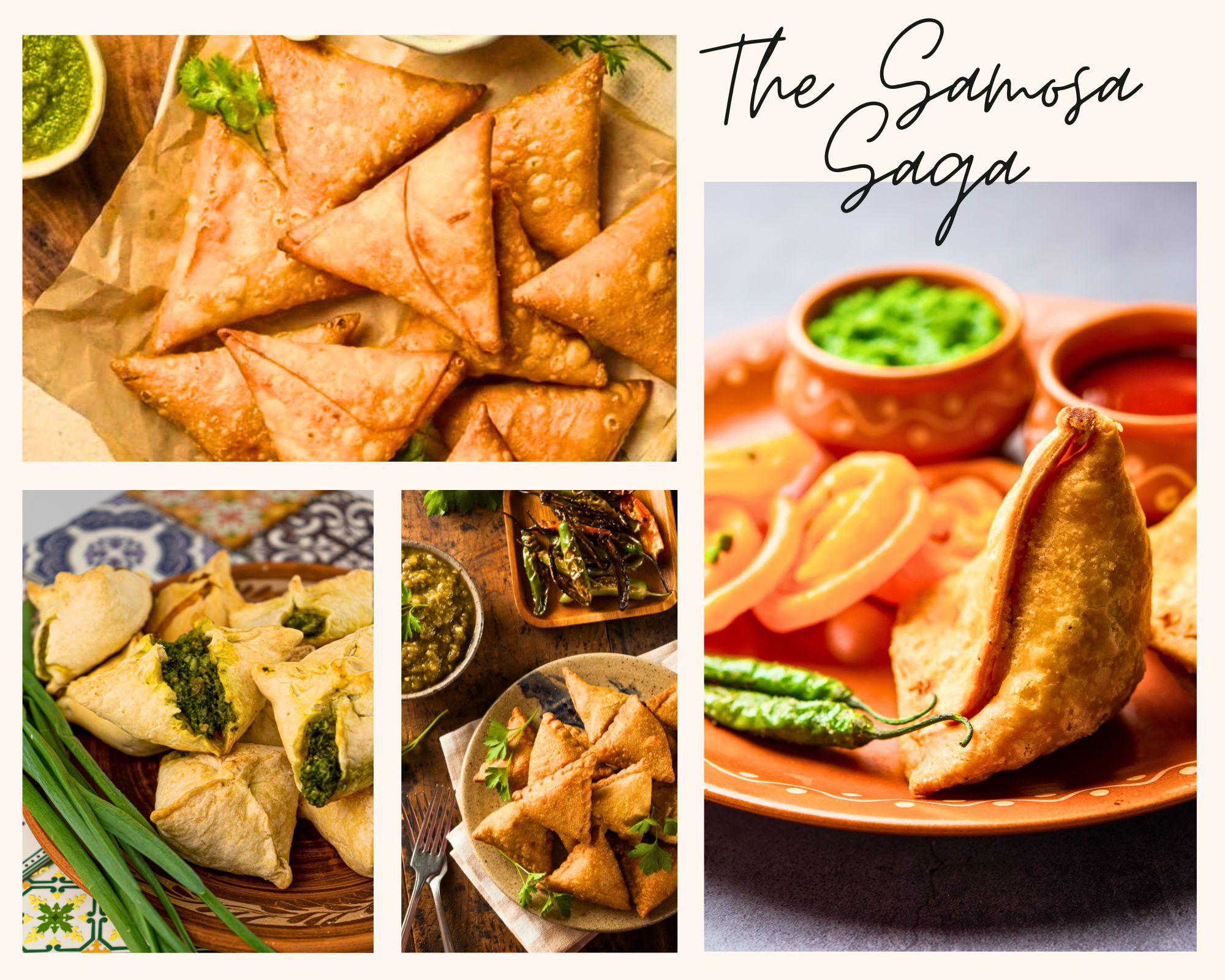
Indian snacks and street food are always fulfilling, but a guilty pleasure for many. And when we take snacks, how can a samosa be left behind? This crisp on the outside, warmly spiced on the inside, humble triangle has a story that was brewed long before it appeared at Indian tea stalls. It is one of my favourite indulgence not so healthy, which I try to make in different ways and will definitely share with you.
But before that, let me share with you the interesting story of how our street favourite Samosa travelled centuries and continents before becoming India’s most iconic street snack. I was amazed by it, and surely you might be interested as well, so let's know the story behind origi of Samosa, and learn with me how to make a healthy samosa option.
From Royal Tables to Street Corners: The Origin of the Samosa
The samosa traces its roots to the Middle East and Central Asia, where it was known as “sambusak” or “samsa.” Historical records from the 10th century mention these stuffed pastries being served in royal courts of Persia, valued for their portability and long shelf life during travel.
Traders and travellers brought the samsa to the Indian subcontinent between the 11th and 13th centuries, during the Delhi Sultanate period. Early Indian samosas were filled with minced meat, nuts, and spices, enjoyed by nobles and kings. Over time, India made it its own vegetarian version, introducing the now-famous potato filling, local spices, and vegetarian versions that suited regional tastes. It was shaped triangularly, similar to the Middle Eastern version, as it was easy to fill and seal, and the shape allows heat to distribute evenly, cooking the dish thoroughly.
Today, the samosa stands as a symbol of Indian comfort food, enjoyed across regions with countless variations. Typically samosa in English is known as a stuffed savoury pastry or rissole. Now let’s learn step by step how to make the Street style samosa, but a healthier version.
Classic Potato Samosa Recipe (With a Healthier Twist)
- Ingredients
- For the Dough
- 2 cups whole wheat flour (or mix with all-purpose flour)
- 1 tsp ajwain (carom seeds, slightly roasted)
- 2 tbsp oil or ghee
- Salt to taste
- Water (to knead)
- For the Filling
- 3–4 boiled potatoes, mashed roughly
- 1 tbsp oil
- 1 tsp cumin seeds
- 1 tsp ginger, grated
- 1–2 green chillies, finely chopped
- ½ cup green peas (optional)
- 1 tsp coriander powder
- ½ tsp garam masala
- ½ tsp red chilli powder
- 1 tsp amchur (dry mango powder)
- Salt to taste
- Fresh coriander leaves, chopped
- Soaked peanuts (optional)
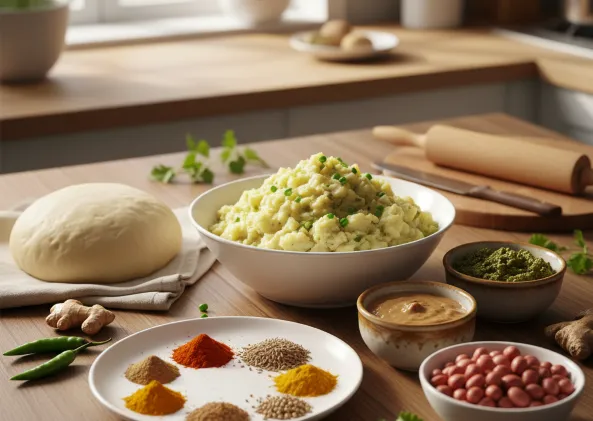
Step 1: Prepare the ingredients
- Get your ingredients ready, make sure your potatoes are cooked and easily mashable to make the filling easily ready.
- One thing I like to add to this mixture is coriander, fennel seed and fenugreek seed powder, 1 tsp, which gives a different taste and makes the mixture gut-friendly.
Step 2: Assemble and start making
- Now, start with making the filling. In a pan, heat oil and add cumin seeds, then add ginger and green chillies; sauté briefly.
- Once it leaves fragrance, stir in peas, the soaked peanuts if you are using, all the spices, and mashed potatoes, mix well, and cook for 2–3 minutes. Finish with coriander leaves. Let the filling cool.
- One thing I like is adding onion and garlic as I love their flavour, but I caramalize it along with the ginger so it moulds with the filling and doesn't overpower it. (FYI, this is also my aloo ka paratha mixture, you know, two birds one arrow)
Step 3: Shape your samosa healthy
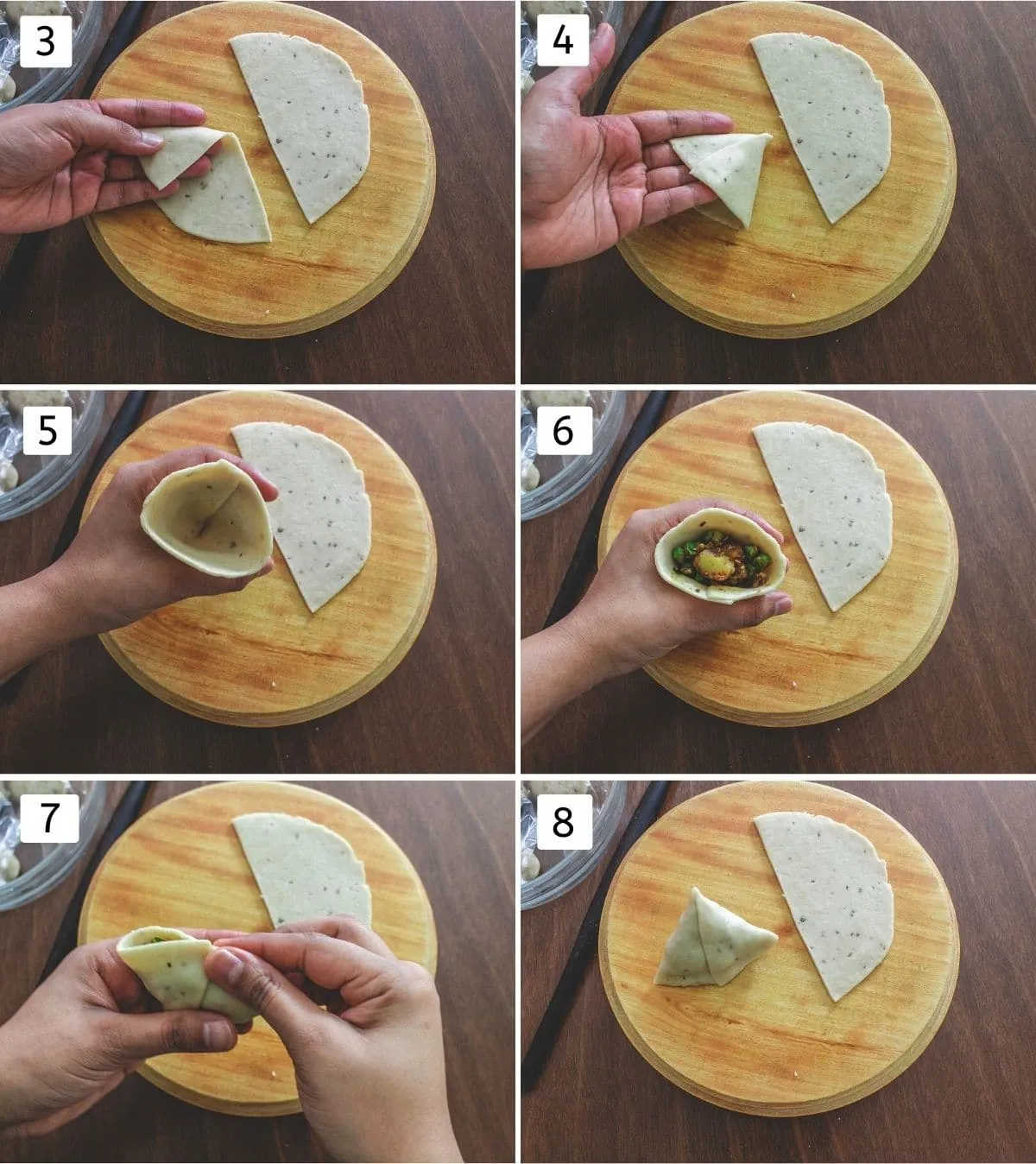
- Once you have the filling ready, go for the dough. Mix flour, salt, carom seeds, and oil. Rub oil into flour until crumbly.
- Knead into a stiff dough using water. Rest for 20 minutes.
- Now divide the dough into balls, roll into oval-shaped chapatis, and cut in half. Shape each half into a cone, fill with potato mixture, and seal edges with water.
- And then for the final step to keep it healthy, either Air-fry at 180°C for 12–15 minutes, or Bake: 200°C for 20–25 minutes.
- There is an option for shallow fry that I hardly recommend, as oil is used and it takes longer for even cooking, changing the texture and taste of the samosa cover. And if you want to go for shallow fry, shape it in a circle like a tikki or kachori, which will make it easier.
Step 4: Garnish and Enjoy
- Serve hot with mint chutney or tamarind sauce. Pair with masala chai for the ultimate comfort and authentic Indian street food experience.
People Are Curious About:
1. Is a Samosa a Dumpling?
Ans) A samosa is similar to a dumpling but not the same. Dumplings are usually boiled or steamed, while samosas are traditionally fried or baked. Both involve stuffed dough, but samosas are pastry-based with a crisp shell, making them a distinct snack category.
2. What is a samosa called in English?
Ans) In English, a samosa is simply called a samosa. Sometimes it’s described as a stuffed savoury pastry or fried turnover for clarity, but the original name is widely accepted and used globally.
3. Is a samosa a healthy food?
Ans) A samosa can be healthy when prepared mindfully. Baked or air-fried samosas made with whole wheat flour and vegetable fillings are nutritious. Deep-fried versions are higher in fat and should be enjoyed occasionally rather than daily.
4. Does rissole mean Samosa?
Ans) No, a rissole is not a samosa. Rissoles are European snacks, usually round and crumb-coated, often made with minced meat or mashed potatoes. While both are stuffed foods, their preparation, origin, and texture are different.
The Samosa Evolution: How a Street Snack Got Its Modern Makeover
Samosa travelled through the Middle East and Central Asia, filled with minced meat, nuts, and spices, wrapped in dough and baked or fried. When it reached India via trade routes, it underwent a defining transformation, influenced by local tastes, climate, and widespread vegetarianism, with spiced potatoes, peas, and indigenous masalas.
With time, the samosa continued to evolve. Modern India has reimagined it with countless regional and contemporary upgrades, from paneer, cheese, corn, noodles, and pav bhaji fillings to regional styles like Punjabi aloo samosa, Bengali singhara, Gujarati sweet samosa, and South Indian mini samosas.
Health-conscious versions have also emerged, including baked or air-fried samosas, whole wheat or millet crusts, and protein-rich fillings like sprouts and lentils.
A Snack That Stands the Test of Time
From Persian palaces to Indian households, the samosa has evolved without losing its soul. To say it went from royal meat pastry to a versatile, healthier, and endlessly creative snack, the samosa’s journey reflects how tradition adapts, without ever losing its crisp charm.
By choosing whole grains, lighter cooking methods, and balanced fillings, this timeless snack fits beautifully into modern, healthy home cooking, proof that tradition and wellness can coexist, one crispy bite at a time.
Written by P. Manika (Performist Content Writer)
