One Dish Many Stories: Poha’s Journey Through India's Kitchen
October 23, 2025
Every delicacy cooked has a whole lot of history behind it, and the legendary breakfast, Poha (flattened rice), is not an exception. When Poha is mentioned, it is assumed to be Maharashtra's staple breakfast. Well, won't lie, as a Maharashtrian, we take pride in our Kanda Poha. Yet when I got curious to explore this delicacy, some interesting stories linked to it came forth. Also, do you know it is quite famous in many parts of India? So today, let’s explore this journey of Poha through different parts of India and how they like it.
Beyond the Bowls: The Timeless Journey Flattened Rice (Poha)
Well, one thing my grandma told me when I asked her about who thought of this Poha was, Why not just eat it as rice? She had no clue. But she told me not to question poha, it is Shri Krishna’s favorite, which puzzled me. Then she told me the story of Shri Krishna loving the Atukulu, which Sudama, his dear friend, brought him, and hence, even today in many Krishna and Vishnu temples, sweet flattened rice is served as Prasad. Even on Diwali morning, during Narakchaturthi, along with breaking Karit fruit, a mix of Poha, milk, sugar, and coconut with a dash of nutmeg powder is made, honoring Shri Krishna's act of ending Narakasur’s atrocities. Apart from that, I also found out who came up with the idea of flattened rice for cooking; it was travelers and traders in ancient India.
Flattening the rice is a traditional method to preserve it for a long period of time. In ancient times, travel was a long expedition, unlike today, so carrying convenient food was a necessity, and this flattened rice was convenient to carry, easy to eat, and sometimes even without cooking. So, Poha or flattened rice was the traveler's or trader's staple. It is said that in ancient India, this tradition started in the rice-rich producing area that is Maharashtra today, and it traveled across India with them and settled in some states in their own way. So let’s explore some famous Poha recipes across Indian States,
The Great India Poha Trail: Discover the Diverse Flavor of Poha (Flattened Rice)
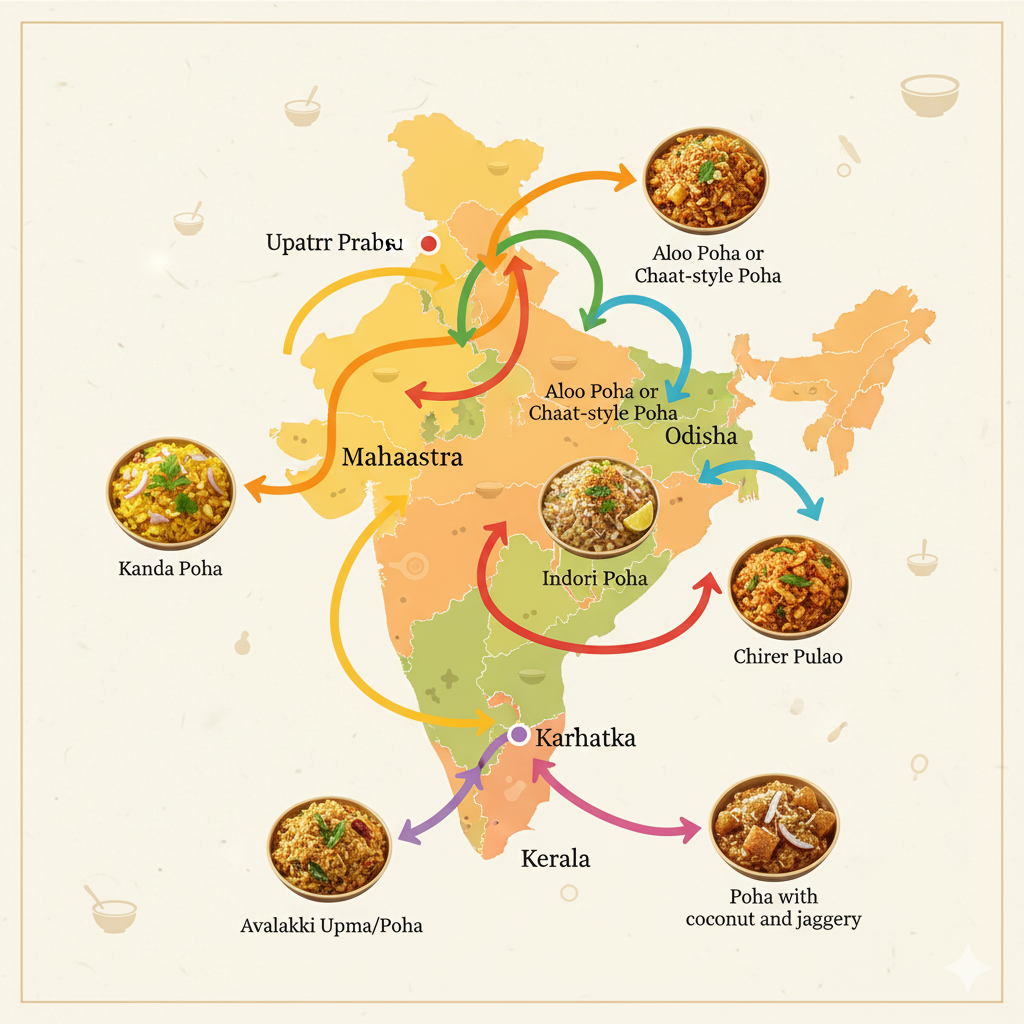
Maharashtra
Famous as Kanda Poha, it is not just a dish but has several emotions to it. Because it served as the customary dish in the process of arranged marriage to the groom when he first came to meet his prospective bride.
So Kanda Poha in Maharashtra is simple yet flavourful with cumin-mustard seeds, curry leaves, green chilies, soft fried onion, and peanuts for crunch, topped with fresh coriander and grated coconut. This mix in the right amount creates a magic of simplicity, and don’t forget the squeeze of lemon and a little on top for the sweet and sour indulgence. We cannot forget the classic Tarri Poha, where Poha is served with spicy usal tarri, enhancing its flavor.
Madhya Pradesh
Another famous Indori Poha, which traveled with the Maratha rulers when they expanded their kingdom to Madhya Pradesh. It became an intricate part of their culinary delights, and the local people wholeheartedly accepted it, giving it their special touch. The Indori Poha is known for being garnished with Shev, onion, coriander leaves, and pomegranates, and is served along with Jalebi, hence called Poha-Jalebi.
Uttar Pradesh & Gujarat
These two states might be in opposite directions, but their style of making poha depicts their similarity. Batata Poha is famous in these regions, adding potatoes to the mix and enriching the dish a level up. Some like to have this with a sprinkle of shev on it, or only the coriander leaves.
Karnataka, Kerala & Tamil Nadu
In these regions, Poha is called Aval or Avalakki and is made in a variety of flavors from sweet to spicy. In Karnataka, it is generally made by soaking Poha in buttermilk as a cooling dish in summer, and during festivals, a sweet version of it is made by adding jaggery. They also make Avallaki besi beli bhat by adding red chili powder, sambar powder, and veggies to the classic poha, making it palatable.
In Tamil Nadu and Kerala, a classic sweet dish is made by adding grated coconut, jaggery, and banana, which is often served as Prasadam in temples. They also prepare the savory counterpart and call it lemon poha.
Odisha & Bengal
In these states, the sweet flattened rice balls are made as prasad called Chuda Kadamba, famous in Puri for being served as Prasad. It is made by mixing Poha with milk, curd, and jaggery, just like the tales mention Sudama prepared it for Shri Krishna, and he used to like it.
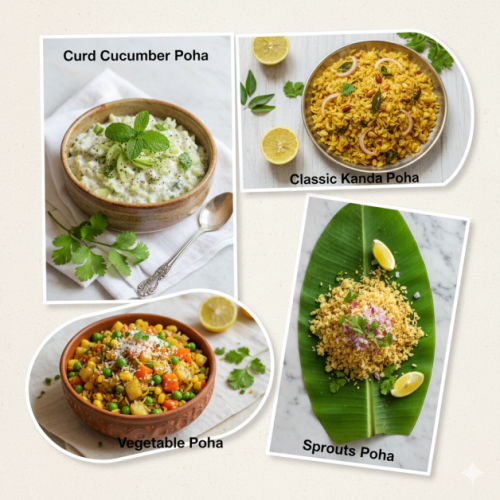
Well, that being said about the journey of Poha all over India, which would be your favorite among these? Well, my favorite would obviously be the classic Kanda poha, but I won’t lie, being a sweet tooth, I would definitely gobble down the sweet counterpart of classic Poha. If you want to know the more health-conscious version of Poha, well, read ahead to The Most Health-Conscious Poha Recipes for Your Diet Plan.
FAQs:
1. What is Poha, and where did it originate?
Ans) Poha, or flattened rice, is rice that has been parboiled, flattened, and dried. It is believed to have originated in India and has been a staple breakfast across the country for centuries, prized for its light, easy-to-digest, and nutritious qualities.
2. What are the popular regional varieties of Poha in India?
Ans) Poha or flattened rice has gained high popularity owing to being diet-friendly these Some popular regional Poha varieties include:
Kanda Poha (Maharashtra) – onions, curry leaves, mustard seeds.
Indori Poha (Madhya Pradesh) – thin Poha, sweet, served with sev and jalebi.
Chirer Pulao (West Bengal) – lightly spiced, sometimes with coconut and nuts.
Bihari Poha – hearty, with peanuts and vegetables.
3. Is Poha healthy for breakfast?
Ans) Yes. Poha is low in calories, rich in carbohydrates, iron, and fiber, and easy to digest. Adding vegetables, peanuts, or sprouts boosts its nutritional value, making it a perfect diet-friendly breakfast option.
4. How is Indori Poha different from Kanda Poha?
Ans) Indori Poha is softer, slightly sweet, often topped with sev, pomegranate seeds, and served with jalebi. Kanda Poha from Maharashtra is savory, cooked with onions, turmeric, mustard seeds, and curry leaves, giving it a more spiced flavor profile.
5. Can Poha be made in a diet-friendly way?
Ans) Yes. Use minimal oil, plenty of vegetables, and roasted peanuts. Avoid fried toppings and pair with lemon juice and coriander for flavor. You can also try quinoa Poha or oats Poha as lighter alternatives.
6. What are some creative ways to serve Poha?
Ans) Poha can be served variously, and sometimes when I am bored with cooking, I simply soak it in tea and have it for breakfast quite famous, and no cooking breakfast, but if you want a twist and a creative way, it can be served as:
Savory breakfast with vegetables and nuts
Sweet Poha with jaggery and coconut
Baked Poha muffins or savory Poha rolls
Fusion salads with sprouts and herbs
7. Can Poha be included in weight-loss diets?
Ans) Absolutely. Poha is light, filling, and low-calorie. To make it weight-loss friendly, add fiber-rich vegetables, sprouts, or protein like tofu, and use minimal oil, ensuring a balanced and satisfying meal.
P. Manika
( Performist, Content Writer)