Hidden Thai Dishes: Classic Vintage Recipes People Never Discover
May 14, 2026
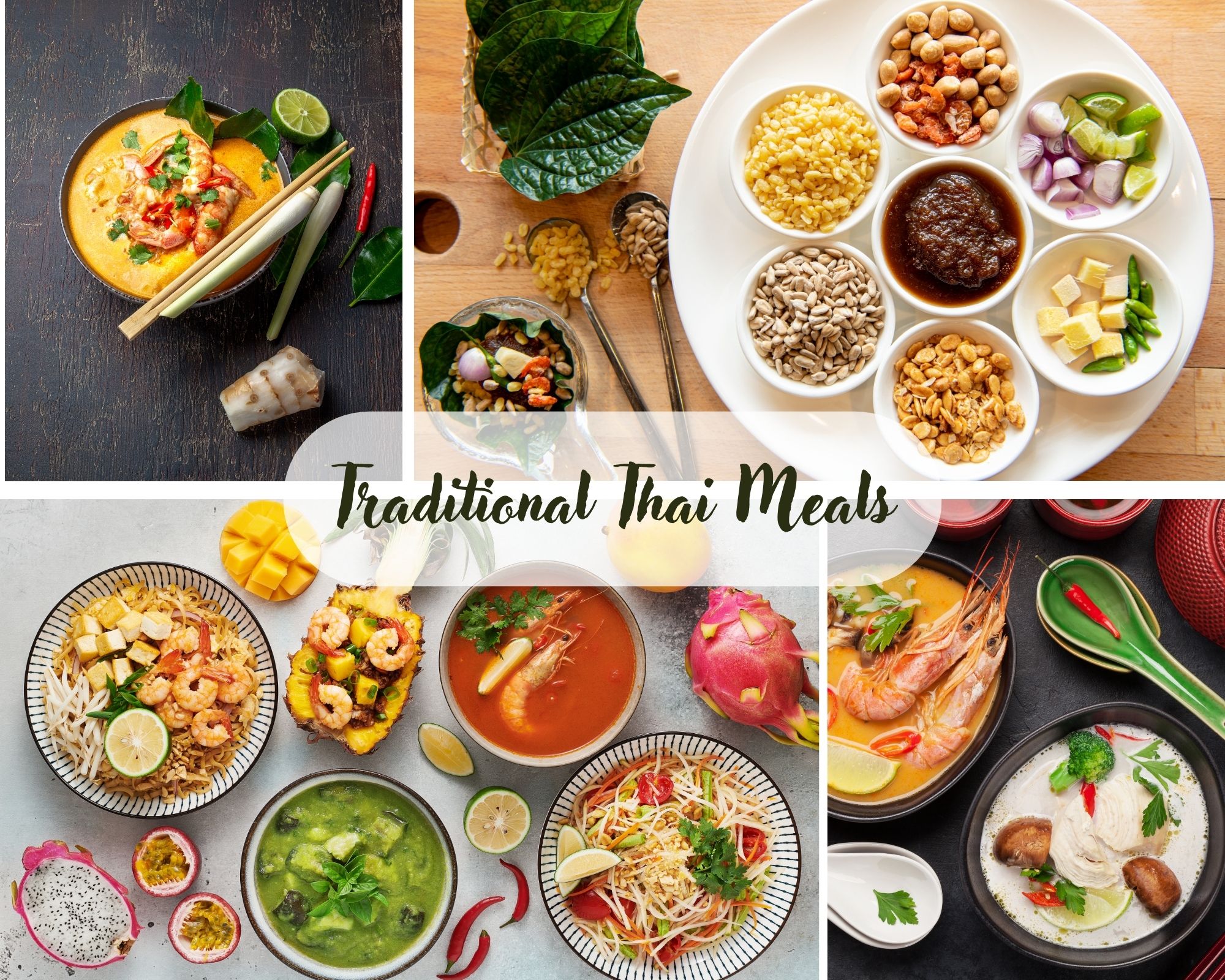
When most people think about Thai cuisine, the first dishes that come to mind are usually Pad Thai or Thai curry, and they are famous among the main course meals. While these iconic meals deserve their global fame, they barely scratch the surface of what Thai food truly represents. In reality, it is one of the world’s most layered, regional, and culturally rich culinary traditions, yet much of it remains underrated outside Thailand.
Most of the time, what makes it into globally famous restaurant menus is just a handful of staples that are highly flexible and adaptable to general taste buds. But traditional Thai cooking goes far beyond sweet noodles and coconut-heavy curries. Hidden behind tourist menus are timeless classic grandma recipes shaped by local herbs, river cultures, farming communities, Buddhist philosophies, and generations of home cooking.
The Essence of Thai Timeless Classic Grandma Recipes
This is another cuisine deeply rooted in balance, not just balance of flavors, but balance of life. Traditional meals are built around harmony: spicy meets cooling, sour cuts richness, herbs aid digestion, and textures contrast each other beautifully. Food in Thailand is not just nourishment; it reflects community, seasonality, healing, and emotional comfort.
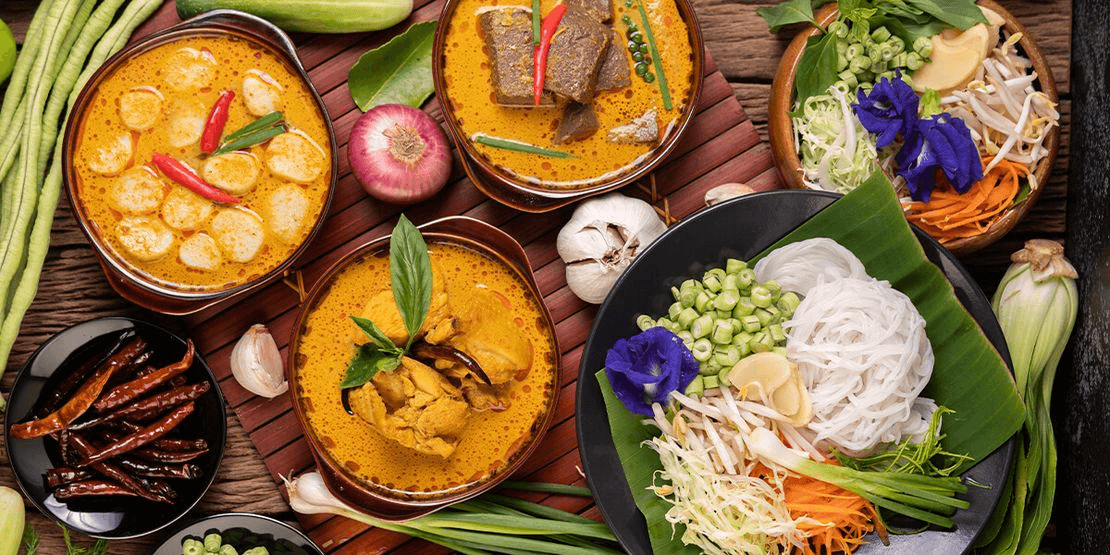
What makes Thai food extraordinary is its fearless use of ingredients, fermented fish, aromatic herbs, toasted rice powders, tamarind, galangal, lemongrass, wild greens, and fresh chilies. Each region of Thailand has its own culinary identity that you can explore through Thai street food. For instance, Northern Thai food is earthy and herbal, Northeastern Isaan cuisine is fiery and fermented, Southern Thai food is intensely spicy and seafood-driven, and the Central Thai cuisine leans slightly sweeter and royal-inspired.
And hidden within these regional traditions are dishes the world rarely talks about. So if you’re ready to move beyond Pad Thai, here are two traditional Thai dishes that quietly carry the soul of authentic Thai cooking.
Two Thai Cuisine Vintage Classic Recipes
Khao Soi: Northern Thailand’s Comfort Bowl
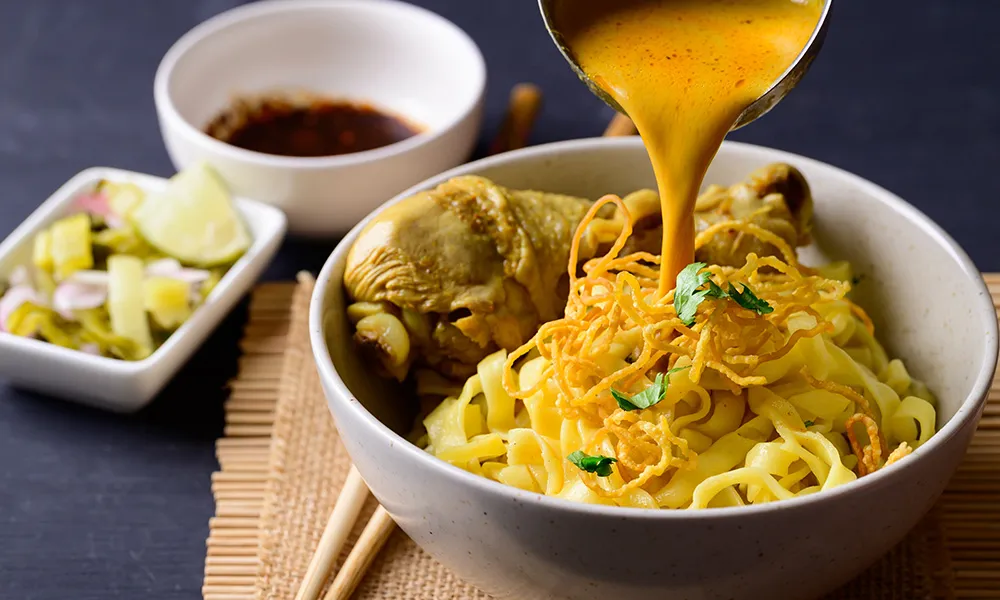
Khao Soi is one of Northern Thailand’s most beloved comfort foods, yet surprisingly many people outside Thailand have never heard of it. Originating from Chiang Mai and influenced by Burmese and Chinese Muslim traders, this dish beautifully reflects Thailand’s layered cultural history.
Unlike the creamy red or green curries most people know, Khao Soi is deeply aromatic, slightly smoky, rich with coconut broth, and topped with crispy fried noodles for texture.
Traditional Khao Soi Recipe
Ingredients
For the Curry Base
- 2 tbsp red curry paste (or prepare a fine paste of red chilies, garlic, shallots, lemongrass, galangal, kaffir lime zest, coriander roots or stems, shrimp paste, white pepper, cumin seeds, coriander seeds, salt)
- 1 tbsp yellow curry powder
- 1 cup coconut milk (prepare a paste of turmeric, coriander powder, cumin, fenugreek, mustard seeds, black pepper, ginger powder, cinnamon, cloves, cardamom, nutmeg, chili powder)
- 2 cups chicken stock/Veg stock
- 2 chicken thighs (tofu for vegan version)
- 1 tbsp fish sauce/1 tbspWorcestershire sauce
- 1 tsp palm sugar
For Serving
- Egg noodles
- Fried crispy noodles
- Pickled mustard greens
- Lime wedges
- Sliced shallots
- Chili oil
Method:
- Sauté red curry paste and yellow curry powder, add coconut milk, and stir it until fragrant.
- Add chicken stock and chicken thighs. Use veg stock and tofu for the vegan versions.
- Simmer until the chicken or tofu becomes tender. The vegan version will be cooked early.
- Add fish sauce and palm sugar. Skip fish sauce if you are making a vegan version.
- Cook egg noodles separately. For the vegan version, you can use rice noodles.
- Take a large bowl, place the noodles at the bottom, and pour the curry broth over them.
- Top with crispy noodles, pickled greens, shallots, and lime.
- The final bowl is rich yet balanced, creamy but brightened with acidity and crunch.
Miang Kham: Thailand’s Ancient Flavor Bomb
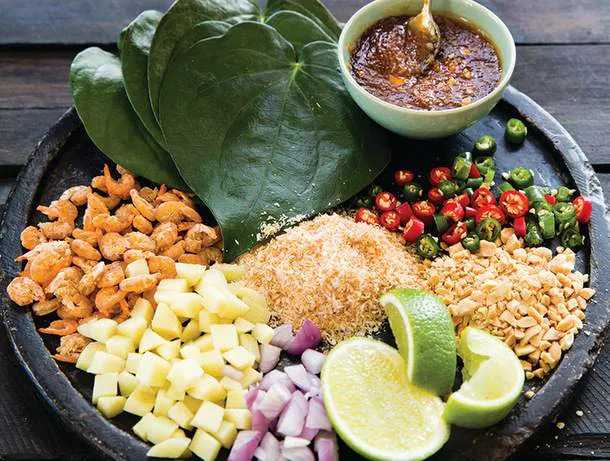
Miang Kham is one of Thailand’s most fascinating traditional snacks and a perfect example of Thai flavor philosophy. The name literally means “one-bite wrap,” and every bite delivers an explosion of sweet, salty, sour, spicy, and earthy notes at once.
Despite being centuries old, it remains relatively unknown internationally. Traditionally served during gatherings and family occasions, Miang Kham encourages communal eating and interactive dining.
Traditional Miang Kham Recipe
Ingredients
For Wrap
- Betel leaves or lettuce leaves
- For Sauce Base
- Bird’s eye chili
- Sauce
- Palm sugar
- Fish sauce/Worcestershire sauce
- Tamarind paste
- Water
For Filling
- Toasted coconut flakes
- Roasted peanuts
- Small dried shrimp
- Finely chopped ginger
- Shallots
- Lime cubes (with peel)
Method:
- Simmer palm sugar, tamarind, fish sauce or Worcestershire sauce, and water until thickened.
- Arrange all filling ingredients: Toasted coconut flakes, Roasted peanuts, Small dried shrimp, Finely chopped ginger, Shallots, and Lime cubes separately.
- Place fillings inside leaves, and drizzle sauce on top.
- Fold and eat in one bite.
- The experience is vibrant, aromatic, and completely unlike typical Westernized Thai food.
Frequently Asked Questions:
1. What is the most traditional Thai dish?
Ans) is considered one of the most traditional Thai dishes because it represents Thailand’s signature balance of spicy, sour, salty, and aromatic flavors. Made with lemongrass, kaffir lime, chilies, and shrimp or chicken, it reflects authentic Thai culinary heritage and regional ingredients.
2. What are the 7 most popular Thai main course meals?
Ans) Some of the most popular Thai main course meals are the sweet and tangy noodles known for their coconut flavor, hot and sour aromatic soup with rich Persian-inspired spices, the savory basil stir-fry, the creamy Northern Thai noodle dish, and spicy salad. These dishes perfectly showcase Thailand’s balance of sweet, spicy, salty, sour, and umami flavors.
3. What is Thailand’s national dish?
Ans) Pad Thai is considered Thailand’s national dish, famous for its sweet, sour, salty, and savory flavors. This popular street-food meal combines rice noodles, tamarind sauce, eggs, tofu or shrimp, peanuts, and bean sprouts, representing the balance and freshness that define authentic Thai cuisine worldwide.
The Philosophy Behind Traditional Thai Cuisine
What makes hidden Thai dishes so memorable is their emotional and cultural depth. Traditional Thai meals are guided by: balance over heaviness, freshness over excess, and community over individual portions. The Thai cuisine has layered flavors instead of singular taste dominance, operating on herbal medicine traditions, seasonal ingredients, fermentation techniques, and respect for ingredient freshness.
Unlike heavily processed modern fast food culture, traditional Thai cooking feels alive, with bright herbs, fresh aromatics, and contrasting textures creating meals that stimulate every sense. Even the Thai sweet dishes are made with light, minimal ingredients, having rich flavours. For instance, the simple dish of sticky mango rice is rich and flavourful, made to melt in the mouth.
Final Thoughts
Pad Thai may have introduced the world to Thai cuisine, but dishes like Khao Soi and Miang Kham reveal its true complexity. Because Thai cuisine is not just about spice or noodles, it is about harmony, storytelling, freshness, and connection. Hidden dishes like Khao Soi and Miang Kham offer a glimpse into Thailand’s rich culinary soul beyond tourist menus and takeout staples.
So the next time you crave Thai food, skip the predictable order and explore the lesser-known vintage classic grandma-style recipes that locals have treasured for generations. Follow Recipesliving for more traditional recipes, forgotten food stories, cultural cuisines, and comforting dishes from around the world that deserve far more attention than they get today.
– P. Manika (Performist Content Writer)
