Bring Italy at Home: Home-made Ravioli, Rolling Filling, and Sealing Love
October 28, 2025
Italian cuisine is indulgent and flavorful, and when I think of the various delicious pasta dishes, it’s fulfilling comfort on a plate. After Indian cuisine, when exploring, I always like to have Italian dishes. One myth about preparing pasta is that they are tiresome and difficult to make, and when one talks of Ravioli, it seems like a big task. Also, acquiring the same flavor and authentic taste is another thing.
The oozing Ravioli is something to indulge in on a weekend dinner night. It might seem like a task, but making it is easy and simple if you follow the steps; you have the perfect homemade ravioli ready to eat, right from the heart of Italy to your kitchen. So, without further delay, let me guide you through the detailed process of preparing your authentic Italian pasta Ravioli.
How to Make Ravioli Pasta at Home:
Ravioli has a base sauce, and ravioli is prepared differently, giving you two different flavors, so ensure your ravioli filling complements your pasta sauce. For instance, if your base sauce is Alfredo, the spicy spinach corn ricotta would go best, but you can also try mushroom parmesan, or roasted vegetable ricotta, and if you want a non-veg version, you can use shredded chicken with an herb-filled. So remember, all the other ingredients would be the same, just the filling ingredient might change.
Ingredients (Serving 4)
For the Pasta Dough
2 cups all-purpose flour (plus extra for dusting)
3 large eggs (For veg alternative, skip eggs)
1 tbsp olive oil
½ tsp salt
1–2 tsp water (if needed, for kneading)
For the Filling (Classic Ricotta & Spinach)
1 cup ricotta cheese (drained well)
1 cup fresh spinach (blanched, squeezed dry, finely chopped)
¼ cup grated Parmesan cheese
1 egg yolk
1 garlic clove (minced)
Salt and pepper to taste
Optional: a pinch of nutmeg for extra flavor
For the Sauce (Tomato Butter Sauce)
2 tbsp olive oil or butter
2 cloves garlic (minced)
2 cups fresh or canned crushed tomatoes
Salt and pepper to taste
1 tsp Italian herbs (oregano/basil)
Fresh basil leaves for garnish
Parmesan cheese for topping
Method:
Start by making the Pasta Dough. On a clean surface, make a mound of flour and create a well in the center. Crack the eggs into the well, add olive oil and salt. For a veg alternative, you can add smooth tofu paste; it's completely optional, you can skip both, and the sheet would still turn out good. But if you are using tofu paste, let the dough rest for a longer time. Gradually whisk the eggs with a fork, drawing in flour from the sides. When it starts to come together, knead the dough for 8–10 minutes until smooth and elastic. Wrap it in cling film and let it rest for 30 minutes at room temperature.
For the filling, in a bowl, combine ricotta, spinach, Parmesan, egg yolk, garlic, salt, pepper, and nutmeg. Mix until creamy and well-blended. Keep aside.
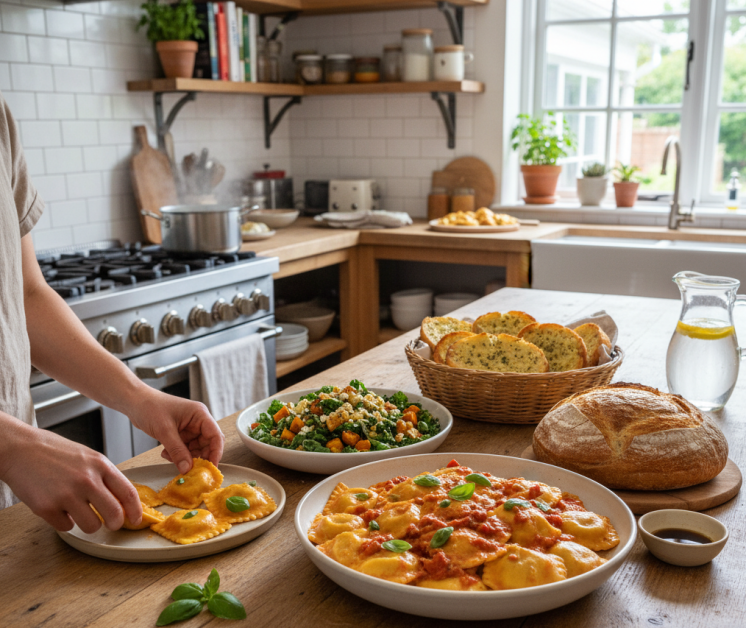
Once filling and dough are done, roll and shape the Ravioli, divide the rested dough into two halves. Roll out one half thinly (about 1–2 mm) using a pasta machine or rolling pin. Place small spoonfuls of filling (about 1 inch apart) on one sheet. Brush edges lightly with water, then place the second rolled sheet on top. Press gently around the filling to seal, ensuring no air pockets. Cut into squares or circles with a knife or ravioli cutter. Dust lightly with flour to prevent sticking.
Now cook the Ravioli. Bring a large pot of salted water to a boil. Add ravioli gently and cook for 3–4 minutes or until they float to the top. Then remove with a slotted spoon and drain.
Once the Ravioli is done, start to prepare the Sauce. Heat butter or olive oil in a pan, and add garlic and sauté until aromatic. Add crushed tomatoes, herbs, salt, and pepper. Simmer for 10–12 minutes until slightly thickened. I like a smooth, creamy consistency, so I tend to blend the tomatoes instead of crushing, and add some fresh cream at the end so if you like the same, you can try
Once the sauce is prepared, combine both and serve. Add cooked ravioli to the sauce and toss gently. Serve hot with grated Parmesan and fresh basil on top.
One suggestion is to pair your ravioli with a glass of white wine (Pinot Grigio) and a side of garlic bread or salad for a full Italian experience.
FAQs:
1. What kind of filling is best for Ravioli?
Ans) Ravioli filling can change according to your base sauce, for instance, in tomato sauce, ricotta and spinach, or meat-based fillings are best to balance acidity. For Alfredo, choosing mushroom, four-cheese, or chicken-herb fillings is complementary to its creamy texture. For pesto sauce, one can use ricotta with pine nuts or goat cheese and sundried tomato, light, aromatic, and perfectly earthy.
2. Is ravioli dough the same as pasta dough?
Ans) Yes, ravioli dough is essentially fresh pasta dough made with flour and eggs. However, it’s rolled thinner than regular pasta to create delicate pillows that hold the filling. Some recipes add a touch of olive oil or water for elasticity, ensuring the dough seals perfectly without cracking during cooking.
3. Are ravioli healthy to eat?
Ans) Ravioli can be moderately healthy depending on the ingredients. When made with whole-grain flour, lean fillings (like spinach or chicken), and light sauces, it offers a balanced meal of protein and carbs. However, heavy cream or cheese sauces increase calories. Homemade versions allow control over fat, sodium, and portion size.
4. What is the most common ravioli filling in Italy?
Ans) The most traditional Italian ravioli filling is ricotta and spinach, especially in Northern regions. Other regional variations include pumpkin and amaretti in Lombardy, meat-filled ravioli in Emilia-Romagna, and ricotta with herbs in Tuscany. Simplicity and freshness are key; authentic Italian ravioli focuses on natural, high-quality ingredients.
5. Do you add egg to ravioli filling?
Ans) Yes, many classic ravioli fillings include a beaten egg to bind the ingredients, especially cheese or meat mixtures. The egg helps maintain structure while cooking and prevents the filling from separating. However, for lighter fillings like ricotta-spinach or vegetable-based versions, eggs are optional and can be replaced with breadcrumbs.
6. Can you fry the ravioli instead of boiling?
Ans) Absolutely! Fried ravioli, a St. Louis specialty, is crispy outside and creamy inside. Lightly coat uncooked ravioli in breadcrumbs, then fry in hot oil until golden. Serve with marinara sauce for dipping. It’s richer than the boiled version but offers a delicious, crunchy twist for appetizers or party snacks.
– P. Manika (Performist Content Writer)