5 Most Health-Conscious Poha Recipes for Your Diet Plan
October 23, 2025
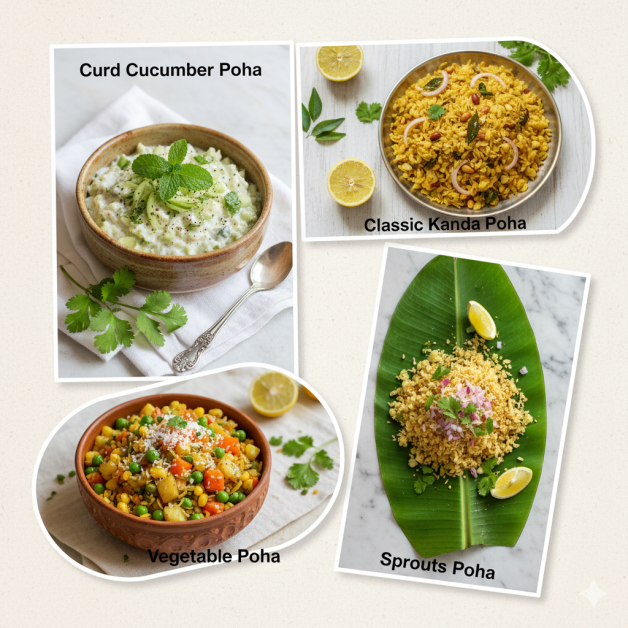
Life is running on a clock, and health is taking a toll due to unhealthy and quick eating habits. What we need to do is revamp our food to a healthy take. Eating healthy is the key to a long and worry-free life, and even though I am a total foodie, keeping my diet health-conscious is a priority. Starting the day with a plate of delicious Kanda Poha is a must; it's my personal favorite. A food for my soul, simply enhanced with a touch of sugar and lemon on top. It's one of the most recommended breakfasts for diets, and with time, I experiment with my Poha to make it healthier.
Why is Poha (Flattened Rice) Good for a Weight Loss Diet?
Well, every food made right is healthy, but Poha (flattened rice), as research and many dieticians suggest, is diet-friendly. It is low in calories, easy to digest, and a good source of carbohydrates, iron, and fiber. When prepared with vegetables, peanuts, and minimal oil, it becomes a complete meal that keeps you full without feeling heavy. It’s also gluten-free, making it suitable for most diets, and adding in some suitable ingredients like sprouts, tofu, or boiled eggs, you can make it healthier.
Diet Delight: 5 Quick Poha Recipes With a Healthy Twist:
1. Vegetable Poha
Same old classic poha with an addition of mixed veggies is good to make your poha healthy and diet-ready.
Ingredients:
Poha (thick poha washed and soaked)
Mixed veggies (Peanuts, green peas, carrots, French beans, small diced cauliflower, diced potatoes, onion, tomatoes, curry leaves, coriander leaves, lemon, broccoli (optional))
How to Make:
Start by heating oil, use olive oil or sesame oil for a healthy alternative, add cumin, mustard, curry leaves, and onion, and fry until golden brown
Add tomatoes and mixed veggies, cook them for about 10-15 minutes on low heat
Once the veggies are cooked, add the soaked Poha, close it, and let it set for another 5 min. Garnish with coriander leaves, and you have your healthy breakfast and evening snack option ready
2. Curd Poha
This is my favorite summer recipe, soothing, gut-friendly, and easy to make with fewer ingredients. Taking just 10 minutes to prepare
Ingredients:
Poha (thick, washed, and soaked)
Curd (whisked with salt and cumin powder)
Cashew nuts, Green chilies, Curry leaves (optional)
Grated cucumber
How To Make:
Mix the cucumber and the soaked poha in the whisked curd
Prepare the tadka by heating olive oil, sesame oil, or mustard oil; first fry the cashew, then add curry leaves and chilies as per your preference
Pour it on mixed curd poha, and you are all set to go
3. Sprouts Poha
If you are looking for post-workout snacking, this is your answer.
Ingredients:
Poha (washed and soaked)
Sprouts (of your choice, boiled in salt and turmeric)
Onions and tomatoes
How To Make:
Heat oil, add cumin, mustard seeds, curry leaves, and fry the onion until light brown
Add in tomatoes, fry until soft, and add the boiled sprouts, followed by poha, and your dish is ready
4. Vegetable Masala Poha
My sister makes this for me in the classic Besi Beli bhat style with Sambar masala
Ingredients:
Poha (washed and soaked)
Veggies of choice (beans, carrot, capsicum, green peas, tomatoes, onion, green chillies, curry leaves, small diced pumpkins (optional))
How To Make:
Heat oil, add cumin-mustard seeds, curry leaves, and fry the onion and tomatoes until soft
Add salt and spices (the classic sambar masala if you want) according to your choice, and add prepared veggies
Cook veggies on medium flame for 15 min, and add the soaked poha (keep veggies more and poha less to make it filling)
Garnish with lemon and coriander leaves, and your filling meal is ready
5. Protein-Packed Poha
Well, poha being veggie-filled and protein-packed is different, especially for those who work out and want a certain amount of protein daily. This can be your dish
Ingredients:
Poha (washed and soaked)
Tofu/Paneer
Mixed veggies and the spice of your choice
How to Make:
Heat oil, add cumin-mustard seeds, curry leaves, onion, and tomatoes
After onions and tomatoes are soft, add Tofu/Paneer and veggies
Once cooked, add Poha again, keep the poha and tofu 50:50 to maintain the proportion
Well, this was just the poha-based healthy recipe. Stay tuned for many more healthy and easy meal recipes. Do try these and share with your friends and family easy and quick diet recipes. Another recipe I prepare for a protein-packed punch is the cereal twist poha. Do read the following article to know more about it.
FAQs:
1. Can I eat Poha on a diet?
Ans) Yes, Poha is a great option for a diet because it is low in calories, easy to digest, and filling. When cooked with minimal oil and plenty of vegetables, it provides fiber, vitamins, and minerals, making it a healthy, weight-friendly meal. It can also be made protein-packed by adding tofu, paneer, sprouts, boiled eggs, and other suitable protein sources.
2. Which is best for weight loss, Poha or Oats?
Ans) Both Poha and oats are healthy, but oats have a higher fiber content and keep you full longer, making them slightly better for weight loss. Poha is lighter and easier to digest, so it works well for breakfast, especially when combined with vegetables and protein.
3. How to make diet poha?
Ans) To make diet-friendly Poha, rinse flattened rice and soak lightly. Sauté mustard seeds, curry leaves, and chopped vegetables in minimal oil. Add soaked Poha, season with turmeric, salt, and lemon juice, and top with fresh coriander and roasted peanuts for added protein and crunch.
4. Can I replace rice with poha for healthy meals?
Ans) Yes, Poha can be a lighter alternative to regular rice in meals because it is easier to digest and lower in calories. However, ensure balanced nutrition by adding vegetables, legumes, or tofu to make it a complete, healthy meal replacement.
5. Are there any cautions in including more flattened rice in your diet?
Ans) While Poha is healthy, overconsumption can increase carbohydrate intake, leading to potential blood sugar spikes, especially for diabetics. It’s best to balance it with protein and fiber, avoid excessive oil, and consume it in moderation as part of a varied diet.
6. What is the best time to eat poha?
Ans) Poha is ideal for breakfast or brunch because it is light, easily digestible, and provides instant energy. Eating it in the morning keeps you full until lunch, while having it late at night may be less suitable if you are watching calories.
7. Do we put tomatoes in Poha?
Ans) Yes, tomatoes are commonly added to Poha in many recipes. They add natural sweetness, tang, and juiciness, while enhancing the flavor and nutritional value with vitamins, antioxidants, and fiber. You can sauté them with onions and vegetables for a healthy, colorful Poha.
P. Manika
(Performist Content Writer)