From Tradition To Table, Exploring The Indian Thali: The Maharastrian Bhog
March 06, 2026
When we talk of a balanced meal, the Classic Indian Thalis are best, given their history of balanced nutrition, flavours, and variety. It is a set of full three-course meals, assembled to be more than just filling the stomach; it is about nourishment, rhythm, culture, and balance. In today’s fast-paced world, we often separate taste from health. But Indian traditional meals prove that flavour and nutrition are not opposites; they are partners.
Food, in essence, is holistic nutrition. Traditional food systems across India were designed with deep nutritional wisdom long before modern diet science existed. Every element on an Indian thali serves a purpose: to energise, cool, heal, and sustain the body according to climate, season, and lifestyle. With this philosophy, we begin a Balanced Thali Meal Series, celebrating state-wise Indian thalis that are not only delicious but nutritionally intelligent. So even if you are sitting in a corner of America, Canada, Japan or even in Europe, if you are a fan of balanced Indian food, we present you with a detailed recipe that can help you curate a tasty and healthy meal with available ingredients, also giving you tips on some kitchen essentials you can stock for an authentic taste.
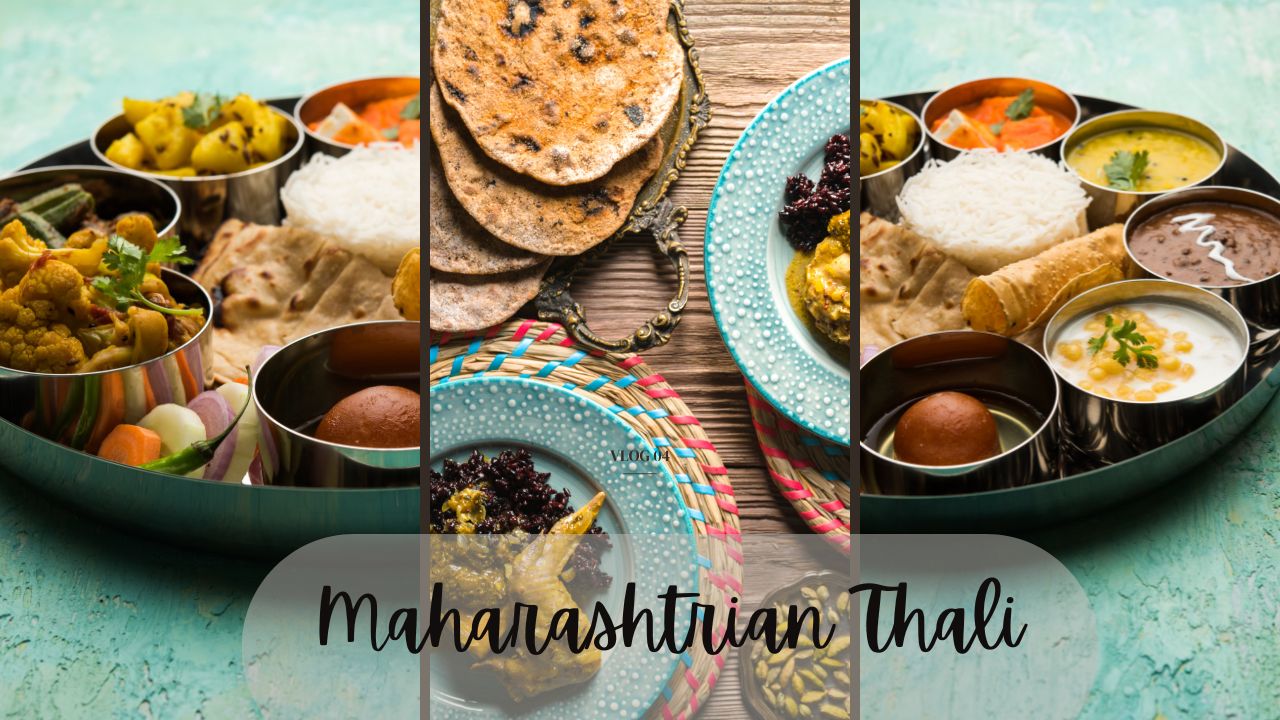
Each thali tells a story of geography, climate, culture, and mindful eating. And today, we dive into the vibrant, nourishing, and seasonally perfect Maharashtrian Vegetarian festive Thali, traditionally enjoyed around occasions like Holi and Gudi Padwa.
Introduction to the Indian Thali: A Complete Nutritional Blueprint
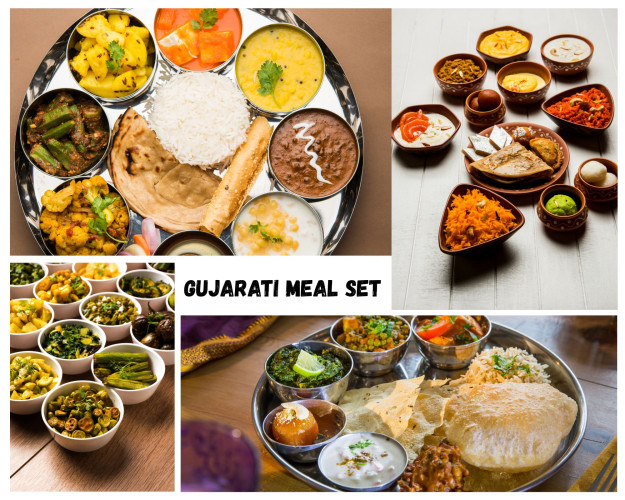
If you want the oldest examples of a balanced meal system Indian thali is one of them. A Thali literally translates to plate, and in this Thali, a meal combo is presented. Instead of a single dish, it is a thoughtfully curated platter where each component contributes to overall nutrition. A classic Indian thali typically includes Grains like rice, roti, bhakri for Energy & fibre, the Plant protein Lentils/Dal, Vegetables filled with Vitamins & minerals, the fermented or probiotic sides for gut health, the pickles & chutneys for digestive stimulants, and finally the sweet dish to satiety & festive completeness.
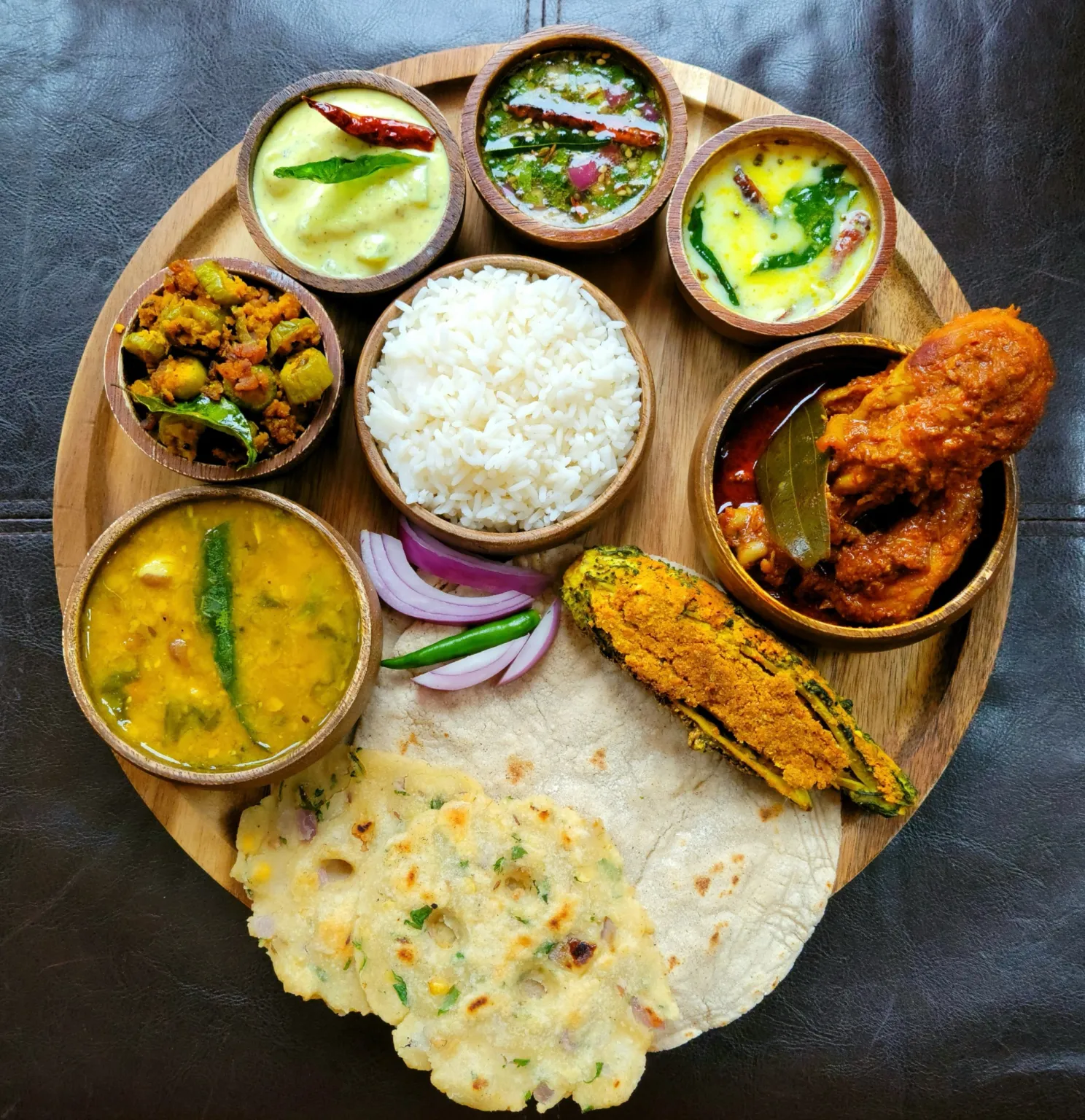
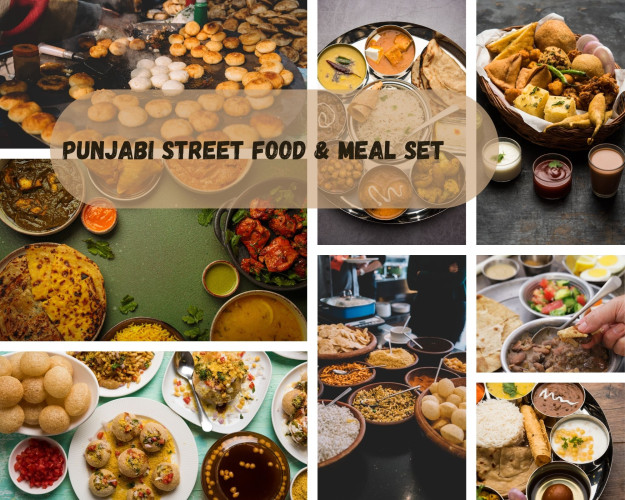
Each regional thali in India is special and differently flavoured as it adapts to local produce and climate. Coastal thalis include coconut and rice, northern thalis lean toward wheat and dairy, and western thalis incorporate millets and legumes. Eastern thalis centre around rice, mustard oil, freshwater fish, while southern thalis highlight rice, lentils, tamarind and fermented elements suited to tropical climates. This beautiful amalgamation of taste, tradition, and nutrition is what makes the Indian thali timeless.
Today’s Feature: The Classic Maharashtrian Veg Summer Thali (Festive Special)
The Maharashtrian thali is simple, rooted in the seasonal and agricultural traditions of Maharashtra, earthy, and incredibly balanced. The summer festive thali (especially around Holi and Gudi Padwa) focuses on cooling foods, light digestion, and seasonal vegetables. Throughout the year, vegetables included in the thali keep on changing, yet the essence remain same with staple spices. If you ever visit a Maharatrain Thali restaurant special you can have more than 10 variety in from this very state, given the regional taste distinctions.
Yet a general component of a Classic Maharashtrian Veg Thali includes 4 Seasonal Vegetable Preparations, Dal (Varan/Amti), Steamed Rice, Bhakri (Jowar or Bajra), Usal (Sprouted legume curry), Sweet Dish (Puran Poli / Shrikhand / Kheer), depending on the ocassion, and Accompaniments like Thecha, pickle, papad, and buttermilk depending on the region. There are both veg and non-veg thali, yet we will explore those one at a time. Today, let’s prepare together the classic festive Maharashtrian Thali.
Detailed Recipes: Maharashtrian Festive Special Thali
Varan Bhaat (Toor Dal & Rice)
Ingredients: 1 cup toor dal, Turmeric, salt, Ghee, Lemon (optional), Rice
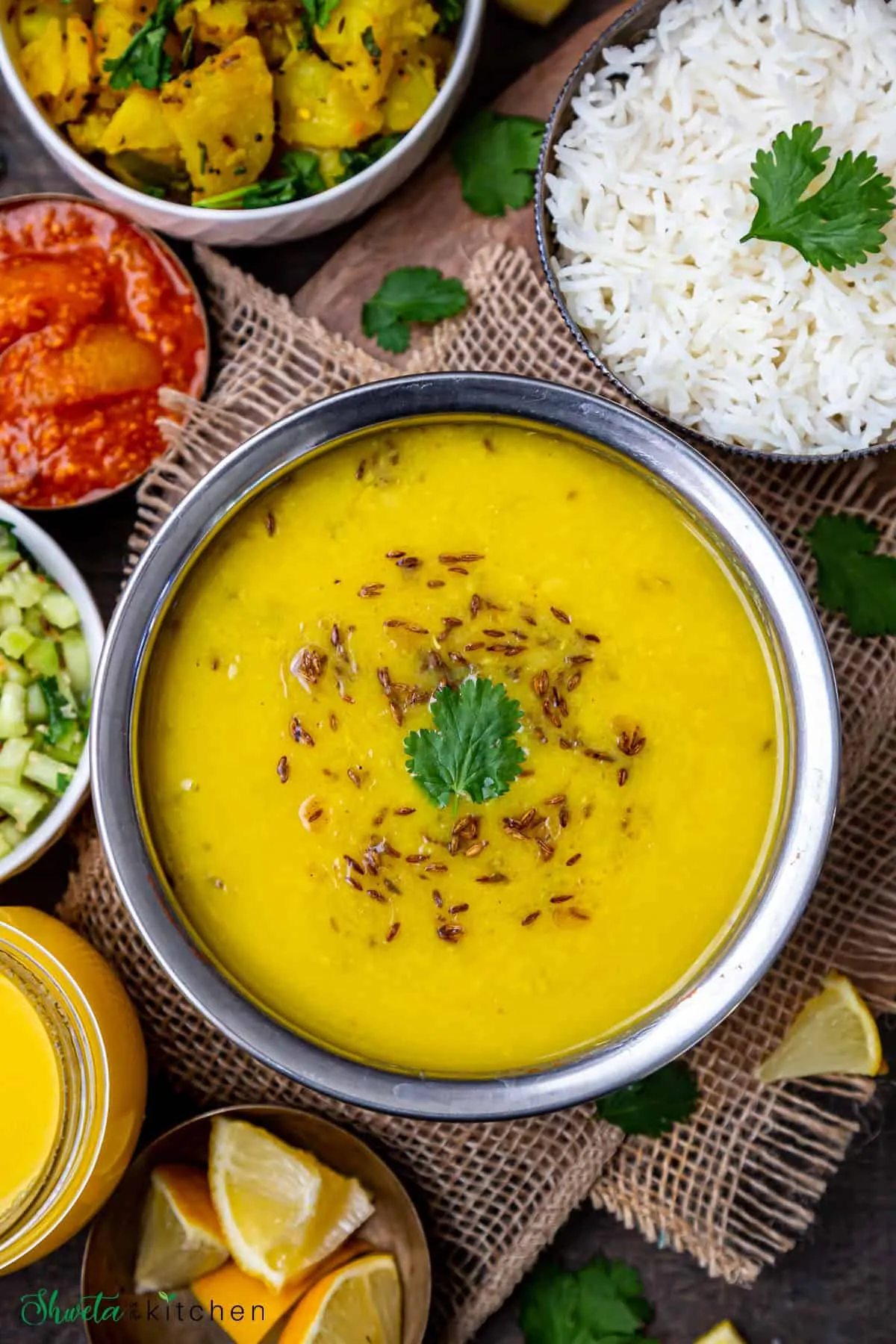
Method:
- Rice, you can use any available in your region, but for authentic flavour, try finding Indrayani or Kolam in a supermarket near you or online stores.
- Pressure cook dal and rice in a separate cooker box at once, saving time. Add turmeric and salt to the dal.
- Mash the dal well and add salt. Temper with ghee for richness.
- Serve with steamed rice and a drizzle of ghee for a comforting protein-rich base.
- In some regions, people add fresh grated coconut and coriander leaves with a temper of mustard seed, cumin seed, curry leaves and asafoetida.
Bhakri
Ingredients: Bhkari Flour, salt, water as required.
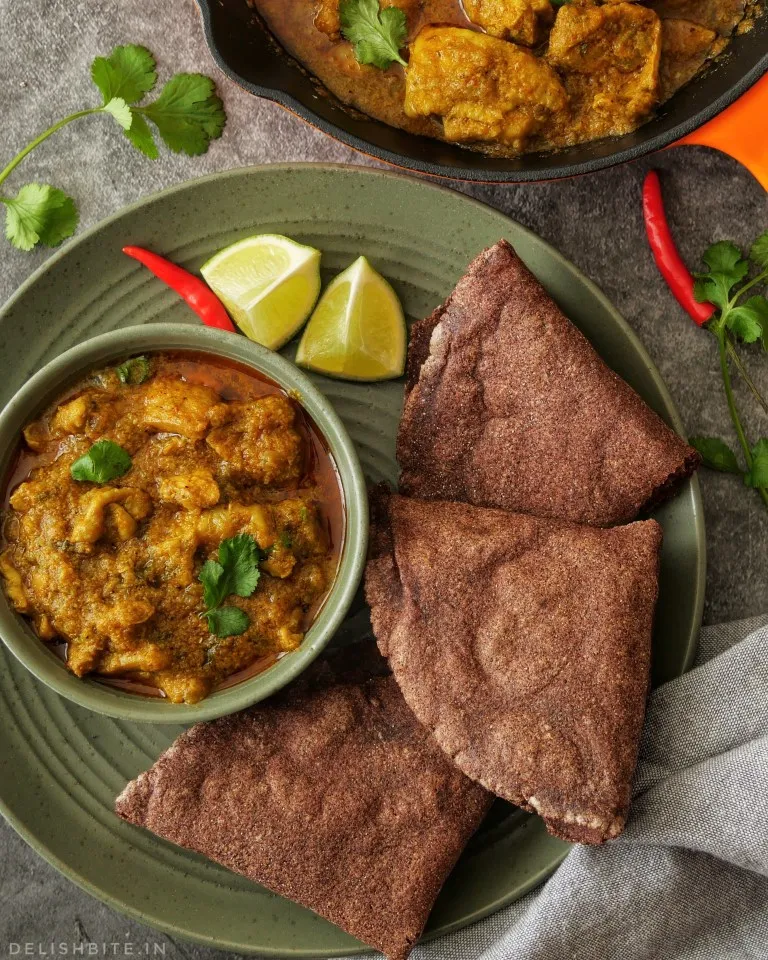
Method:
- Bhakri can be made using jowar flour, Nachni flour, rice flour, and bajari flour. One can even use multigrain flour
- A soft dough is kneaded with water and salt, and balls of the dough are hand-patted or rolled and roasted on a tawa without oil by sprinkling water on one side. Gluten-free and rich in fibre, ideal for summer.
Vegetable 1: Batata Bhaji (Dry Potato Stir Fry)
Ingredients: Boiled potatoes, Mustard seeds, curry leaves, 1 pinch asafoetida (hing), Turmeric, green chillies, Oil and salt
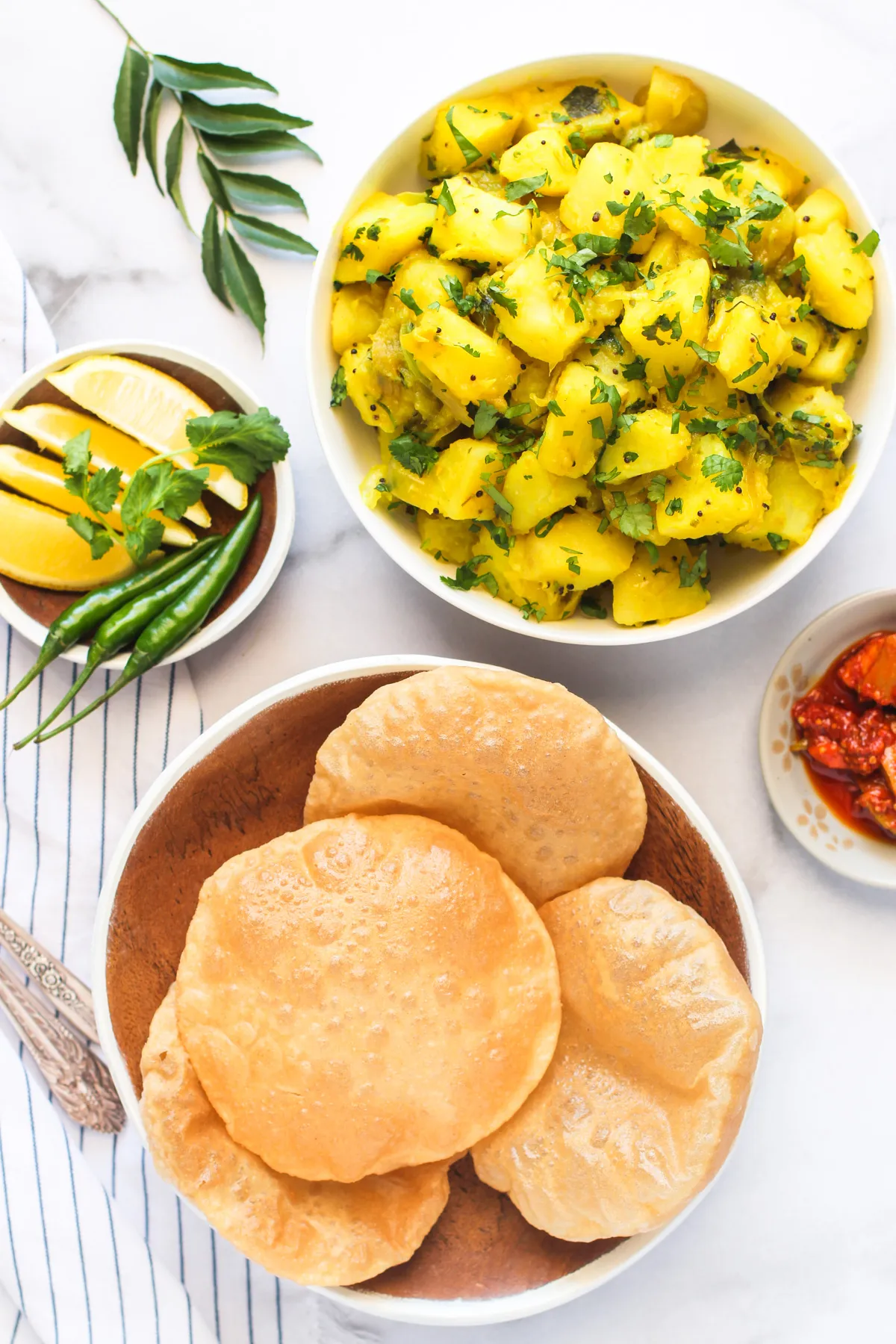
Method:
- Heat oil, splutter mustard seeds and curry leaves. Add turmeric and chillies.
- Toss diced potatoes, sauté lightly, and season with fresh grated coconut and coriander leaves.
- This mildly spiced dish pairs perfectly with dal and bhakri.
Vegetable 2: Kairi Chi Bhaji (Raw Mango Stir Fry – Summer Special)
Ingredients: Grated/diced raw mango, Peanuts, fresh grated coconut, Mustard seeds, Green chillies, 1 pinch asafoetida (hing), Jaggery (optional)
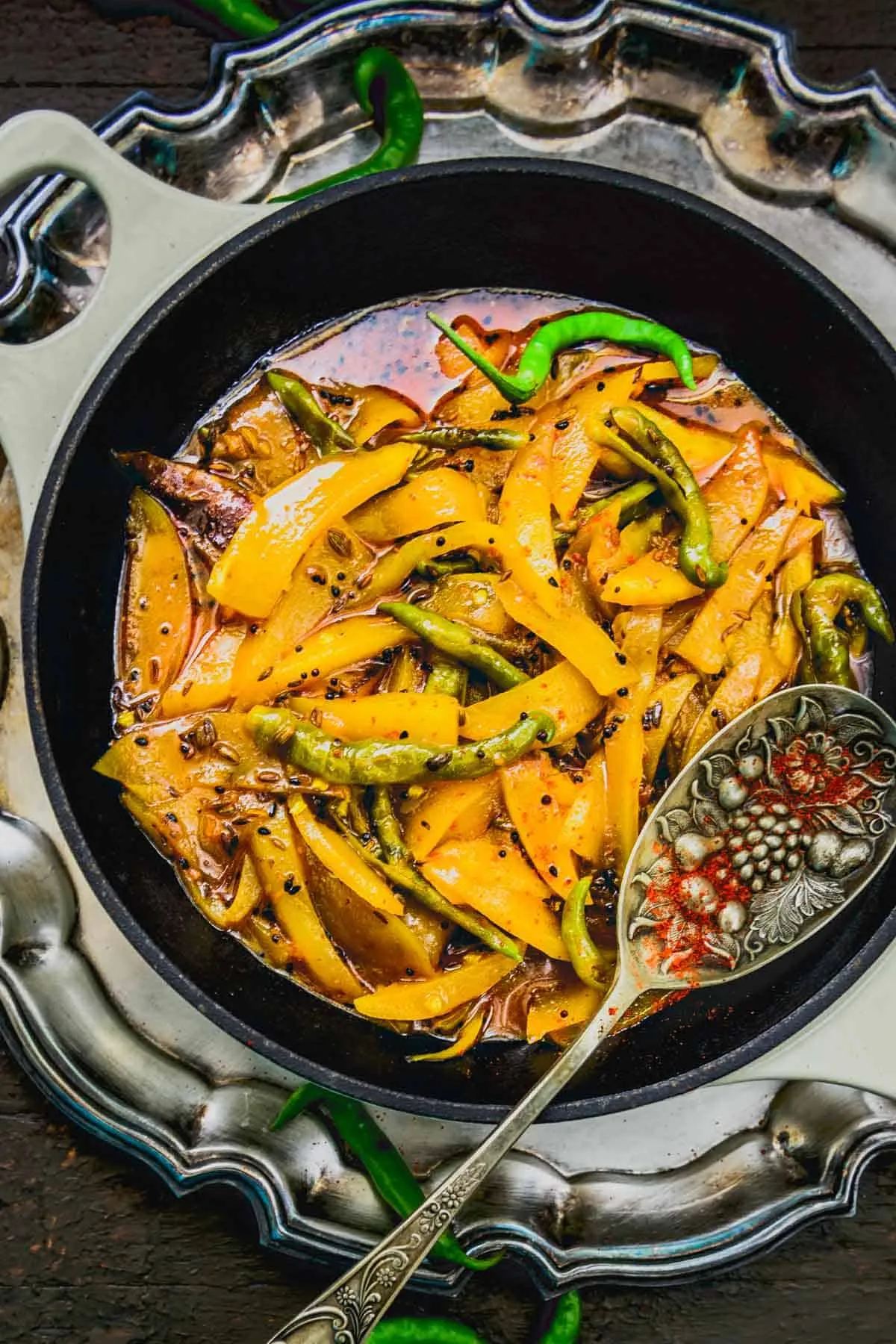
Method:
- Temper mustard seeds and chillies. Add raw mango and sauté briefly.
- Add crushed peanutsand grated coconut and a pinch of jaggery for balance.
- Tangy, cooling, and vitamin-rich.
Vegetable 3: Maharashtrian Style Mix Vegetable Sabzi
Ingredients: 1 cup diced potatoes, ½ cup carrots (chopped), ½ cup green beans (chopped), ½ cup green peas, ½ cup cauliflower (optional), 2 tbsp oil, mustard seeds, cumin seeds, curry leaves, 1 pinch asafoetida (hing), ½ tsp turmeric powder, 1 tsp goda masala, 1–2 green chilies (chopped), Salt to taste, 2 tbsp fresh grated coconut (optional but authentic), Fresh coriander for garnish.
Tip: Use seasonal vegetables available in your region (pumpkin, ridge gourd, or beans) and temper with the same method, given that the taste is the same.
Method:
- Heat oil in a kadhai (wok) and add mustard seeds, cumin seeds, curry leaves, and hing for a fragrant tempering. Add green chillies and turmeric.
- Then, add the vegetables and salt, and mix well. Sprinkle a little water, cover, and cook on a low flame until tender. Add goda masala and grated coconut.
- Mix gently and cook for 2–3 minutes. Garnish with fresh coriander and serve hot with bhakri or dal-rice.
Seasonal Vegetable 4: Maharashtrian Shepu Chi Bhaji with Moong Dal (Dill & Lentil)
Ingredients: 1 cup fresh shepu (dill leaves), finely chopped, ½ cup yellow moong dal (washed and soaked 20–30 minutes), 2 tbsp oil or ghee, mustard seeds, cumin seeds, 1 pinch hing, turmeric powder, 1 green chili (chopped), Salt to taste, 2 tbsp grated coconut (optional), 1–2 tbsp water (if needed)
Tip: You can use any seasonal leafy green available in your region; the best options are spinach, mustard greens, fenugreek leaves, and Amaranth leaves.
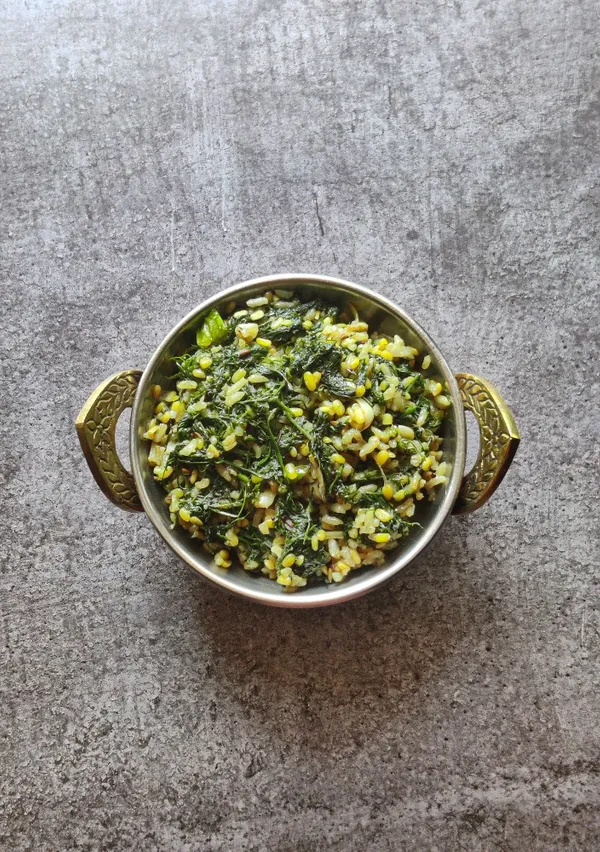
Method:
- Wash and soak moong dal for 20–30 minutes for quicker cooking. Heat oil or ghee in a pan and add mustard seeds, cumin seeds, hing, and green chilli. Sauté briefly.
- Add soaked moong dal and turmeric. Cook 3 min on medium flame. Add chopped shepu (dill leaves) and salt.
- Cover and cook on a low flame until the dal softens and leaves wilt. Finish with grated coconut for an authentic Maharashtrian flavour.
Usal (Sprouted Matki Curry)
Ingredients: Sprouted moth beans (matki soaked and boiled), Onion, tomato, Goda masala, spices, Coconut (optional)
Tip: For usal various beans like white peas, black peas, black chickpeas, split chickpeas, green mung beans, black-eyed peas are used.
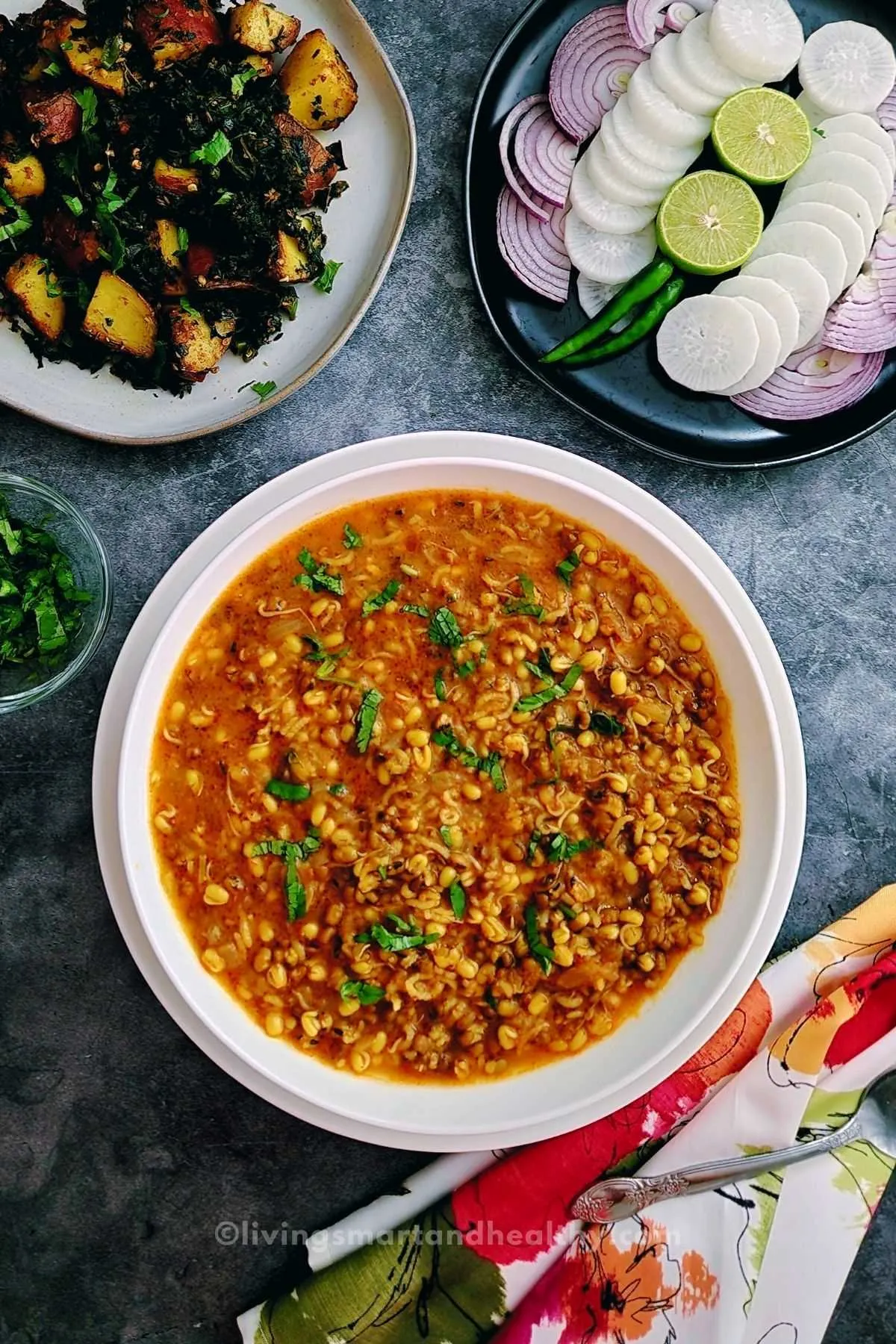
Method:
- Heat oil, add mustard and cumin seeds with curry leaves and asafetida. Sauté the onion and tomato with spices.
- Add sprouts and cook until tender. You can even pressure cook them for easy results
- Finish with goda masala and fresh coriander. A powerhouse of plant protein and fibre.
Sweet Dish: Puran Poli (Festive Holi Special)
Ingredients: Chana dal, Jaggery, Cardamom powder, Wheat/all-purpose flour dough
Tip: The stock left from boiling the Chana dal, use it in Usal for a watery base.
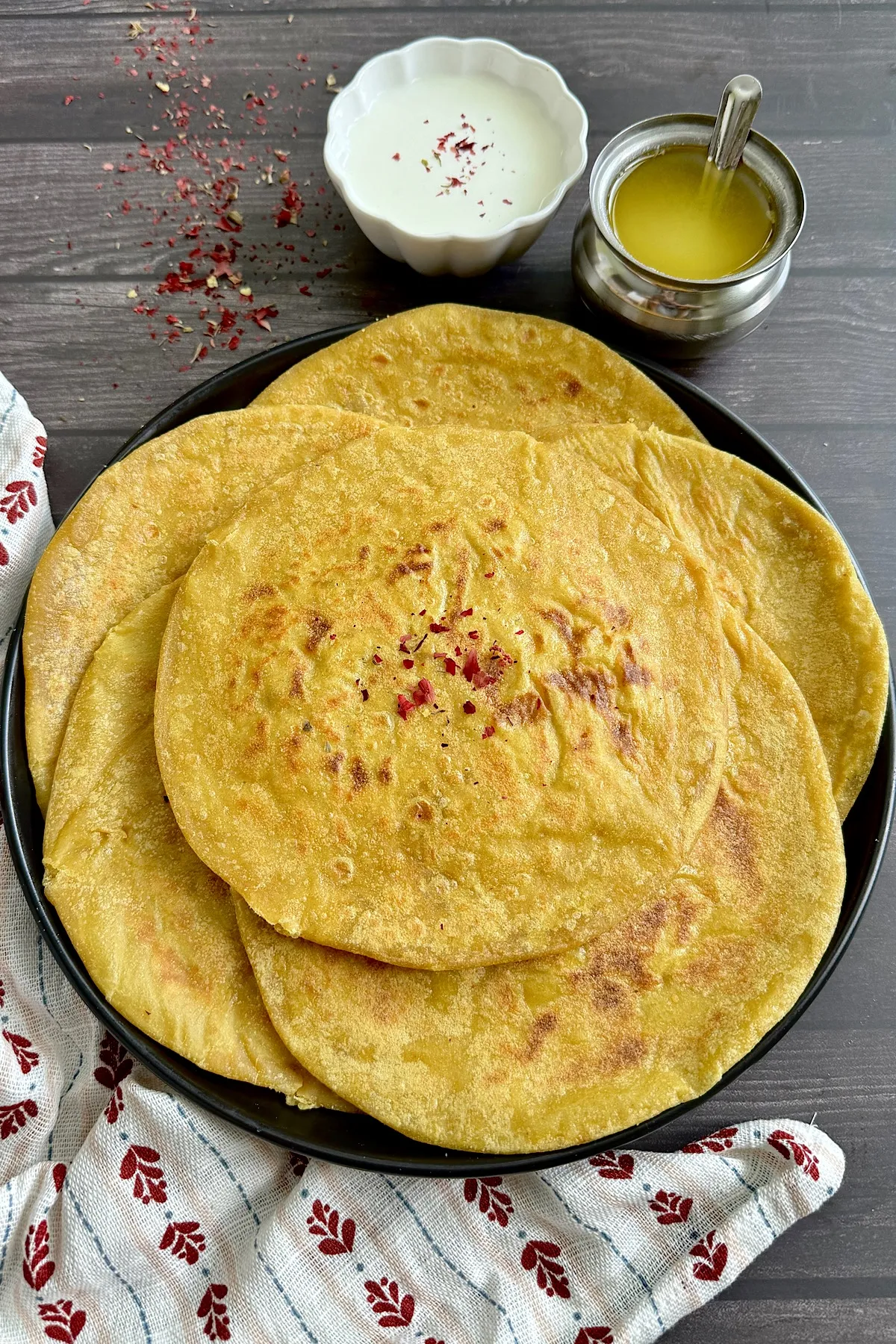
Method:
- Boil chana dal along with toor dal and rice in a cooker to save time. Stir fry your dal in ghee, then mix jaggery and cardamom.
- Once the mixture is dine mash or grind it into a medium dry soft paste, don't let it be sticky. Stuff into soft dough, roll gently, and cook with ghee.
- A festive, protein-rich sweet that completes the thali emotionally and nutritionally.
Why the Maharashtrian Thali is Nutritionally Perfect
- This Maharastrain thali naturally adapts to seasons, enhances digestion and nutrient absorption.
- The meal thali includes balanced protein sources, both in vegetarian and non-vegetarian thalis. This flexibility makes the thali adaptable to dietary preferences without compromising balance.
- The carefully curated Maharastrain spice paste is a taste changer, then fresh coconut, Buttermilk (Taak) as the natural probiotic for hot weather, deeply linked to healthy notes to meals.
- Maharastrain Thali include simple pantry staples, creating complex flavours without heavy processing, elevating taste.
- The true uniqueness lies in its satvik simplicity with depth. The Maharastrain festive special thali is flavourful with varied food items, yet light and filling.
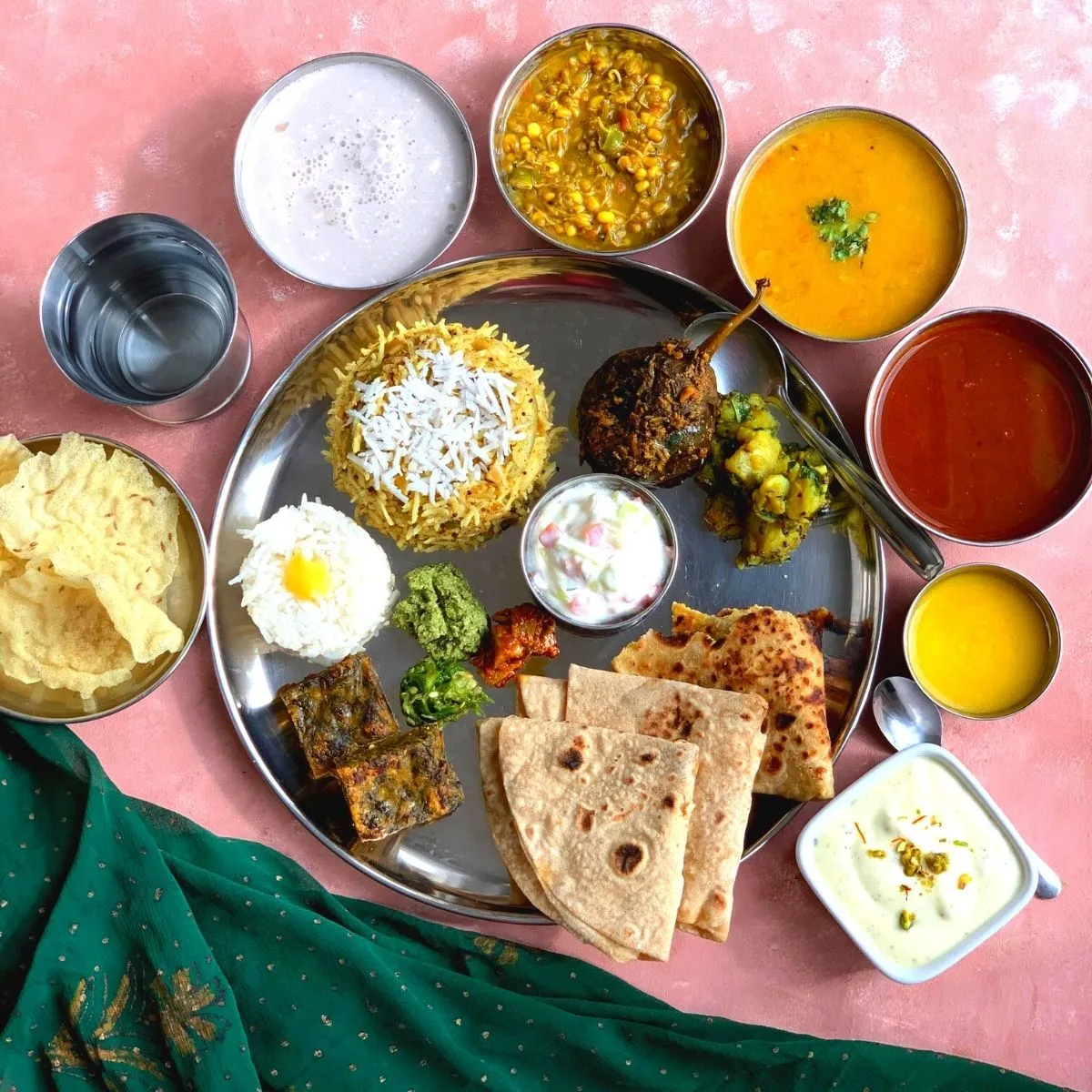
Tips To Curate Maharastrian Thali With Available Pantry Staples
- Curating a Maharashtrian thali at home is easier than it seems, even with basic pantry staples.
- Start with a grain base like rice or flatbread. Add a simple lentil dish, such as dal or amti, for protein; use any available in your region.
- Include one dry vegetable and one lightly spiced curry using seasonal produce like potatoes, eggplant, or greens.
- A small portion of yoghurt or buttermilk balances the spices and aids digestion.
- Pickles or chutneys add brightness and regional flavour, stock them from supermarkets around you.
- If available, include millet breads like bhakri for authenticity.
- Stock authentic regional spices like garam masala, kashmiri masala, and use them according to your spice tolerance
- The Goda and Kala Masala are regional Maharashtrian masalas. If you have it, you are set for authentic taste. I have stocked up from KisanKonnect, but ensure you see the expiry date and use it accordingly.
A Flavourful Conclusion
The Maharashtrian festive thali is more than a festive meal; it is a living example of ancestral nutritional intelligence. Every bowl, every grain, and every spice plays a functional role in nourishment, digestion, and seasonal balance. This thali is made with soul and heart put together for festive occasion elevating its spiritual sourcing and nourishing the body and soul in a balanced and healthy manner.
As we begin this state-wise balanced thali series, we rediscover that traditional food is not outdated; it is timeless wellness on a plate. Wholesome, vibrant, and deeply comforting, this thali proves that the healthiest meals are often the ones rooted in culture, seasonality, and mindful cooking, where flavour meets nourishment most beautifully.
So stay tuned for the next chapter in Traditional Indian Thalis, exploring various meal combinations used to achieve a perfect balance of culture, flavour, health, and mindful eating.
By P. Manika (Performist Content Writer)